
A Tanzania all-inclusive safari is a pre-packaged wildlife trip where most major costs — accommodation, meals, game drives, park fees, and transfers — are bundled into one price. It removes the guesswork from planning and protects you from surprise bills in the bush.
Here’s a quick overview of what to expect:
| Category | Details |
|---|---|
| Typical inclusions | Accommodation, all meals, game drives, park fees, airport transfers, bottled water, professional guide |
| Typical exclusions | International flights, visa fees (~$50-$100), tips, premium drinks, optional activities |
| Budget safari | From ~$350 per person per day |
| Mid-range safari | From ~$450 per person per day |
| Luxury safari | From ~$600+ per person per day |
| Popular duration | 7-12 days |
| Top destinations | Serengeti, Ngorongoro Crater, Tarangire, Lake Manyara |
| Best time to visit | June-October (peak); March-May (low season, best value) |
Tanzania is one of Africa’s most extraordinary safari destinations. The Serengeti alone covers 30,000 square kilometers — roughly 20 times larger than Kenya’s Masai Mara. Add the Ngorongoro Crater, home to an estimated 25,000 animals in a single 260 sq km caldera, and you start to understand why this country draws serious wildlife lovers from around the world.
But booking a Tanzania safari can feel overwhelming. Over 1,150 all-inclusive packages exist. Prices range from a few hundred dollars a day to well over $2,500 per person per night. And the word “all-inclusive” doesn’t always mean the same thing with every operator.
This guide cuts through the noise. Whether you’re planning a 7-day classic safari, a luxury fly-in experience, or a safari-and-beach combo with Zanzibar, you’ll find clear, honest answers here.
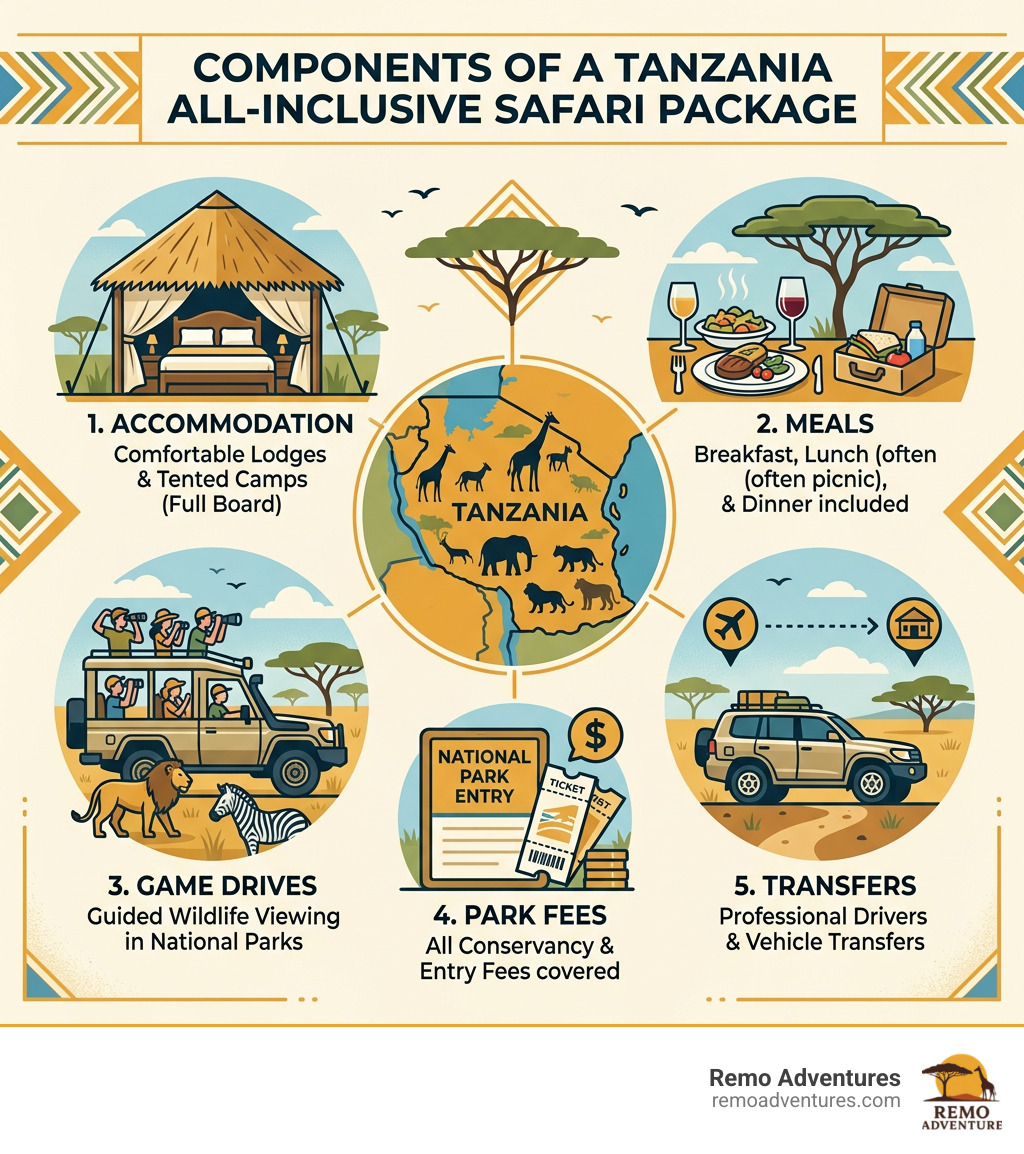
When we talk about a tanzania all inclusive safari, we are referring to a seamless journey where your only job is to show up with your camera and a sense of adventure. At Remo Adventures, we believe the “all-inclusive” label should be a promise of peace of mind.
Typically, these packages are built on a “Full Board” basis. This means your Tanzania Safari includes breakfast, lunch, and dinner. In the bush, lunch is often a high-quality picnic box enjoyed under a flat-top acacia tree, while dinners are multi-course gourmet affairs served at your lodge or camp.
Beyond the food, a true all-inclusive experience covers:
Our Safari Holiday Packages are designed to ensure that the logistical heavy lifting is handled by us, leaving you to focus on the lions.
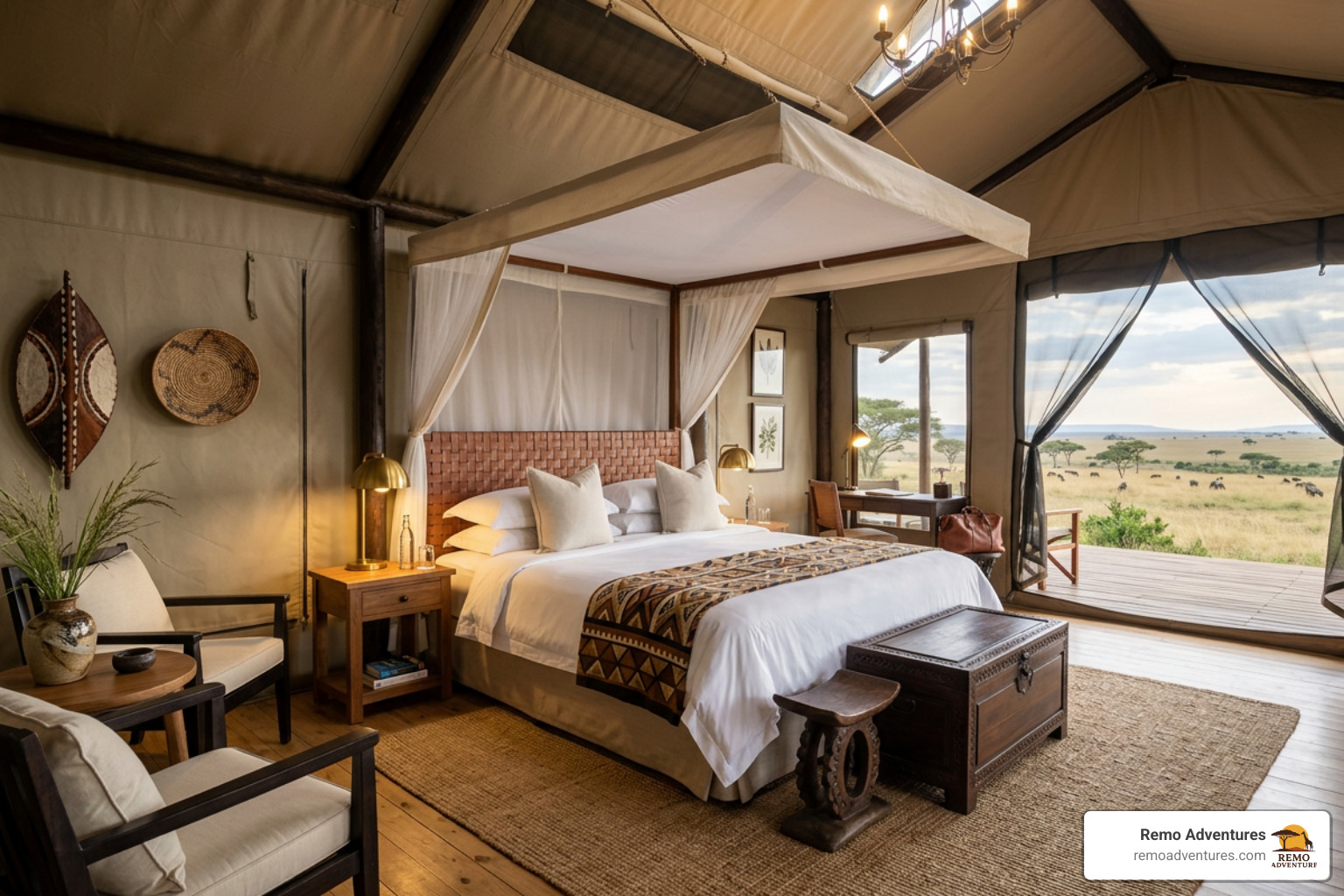
Budgeting for a safari can feel like trying to count the zebras in a migration—there are a lot of numbers moving around! Generally, private budget safaris start at $350 per person per day. Mid-range options usually sit around $450 to $600, while luxury experiences can soar from $800 to over $2,500 per person per night.
| Safari Tier | Daily Cost (Per Person) | Accommodation Style |
|---|---|---|
| Budget | $350 – $400 | Public campsites or budget lodges outside parks |
| Mid-Range | $450 – $600 | Comfortable tented camps and 4-star lodges |
| Luxury | $800 – $2,500 | High-end boutique lodges and exclusive mobile camps |
Why the massive range? It comes down to exclusivity and location. A camp located inside the Serengeti costs more than a lodge an hour’s drive outside the gate because you aren’t just paying for a bed; you’re paying for the ability to hear lions roaring while you brush your teeth.
Seasonality also plays a role. During the “Green Season” (March to May), you can find accommodation discounts of up to 50%. Conversely, during the peak season (July to October), prices can jump by 20-30% due to high demand.
While we aim for “all-inclusive,” there are a few items that are almost never included in a standard safari quote. It’s important to keep these in mind so your wallet doesn’t get any nasty surprises.
By understanding these, you can Experience Tanzania Safari with total financial clarity.
Tanzania’s “Northern Circuit” is the heavy hitter of African wildlife. Most tanzania all inclusive safari itineraries focus on this region because the parks are relatively close together, minimizing travel time and maximizing “game time.”
The star of the show is the Serengeti National Park. Renowned for its vast plains and the Great Migration, a Serengeti Safari Tour is the quintessential African experience. It is 30,000 square kilometers of raw nature.
Next is the Ngorongoro Crater. Often called the “Eighth Wonder of the World,” this collapsed volcano acts as a natural enclosure for the Big Five. It has the highest density of large mammals in Africa.
Tarangire National Park is famous for its massive baobab trees and huge elephant herds—sometimes 300-strong! Meanwhile, Lake Manyara offers a lush groundwater forest, thousands of flamingos, and the famous tree-climbing lions (who are probably just trying to escape the flies, but they look very majestic doing it).
For those with less time, a 4 Days Wildlife Safari Expedition in Tanzania can cover the highlights of Tarangire, Ngorongoro, and Manyara efficiently.
The Great Migration is not a single event but a year-round cycle. If your heart is set on seeing the dramatic river crossings, you’ll want to book your 7 Days Wildlife Wonder Expedition between July and October in the Northern Serengeti.
However, the “Calving Season” in January and February in the southern Ndutu plains is equally spectacular. This is when roughly 8,000 wildebeest calves are born every single day. Where there are babies, there are predators, making for some intense wildlife viewing.
If you are a fan of quiet landscapes and lower prices, the shoulder seasons (June or November) offer great wildlife density without the “traffic jams” of vehicles sometimes seen at major sightings in peak months. Our Serengeti Wildebeest Migration Safari can be tailored to wherever the herds are currently located.
One of the biggest decisions in a tanzania all inclusive safari is how you get between the parks.
Drive-In Safaris: This is the “classic” way. You travel with your guide from Arusha, driving through local villages and seeing the changing landscapes. It’s more cost-effective and allows for a private vehicle throughout the trip. However, be prepared for “African Massage”—our affectionate term for the bumpy dirt roads!
Fly-In Safaris: If you want to maximize your time, you can use bush planes. These small aircraft land on dirt airstrips in the middle of the parks.
You can check Coastal Aviation flight schedules to see how the bush plane network operates. Many travelers opt for a hybrid approach, like our 4 Days Serengeti to Ngorongoro route, which balances road travel with strategic park placements.
After a week of dusty game drives and early 6:00 AM wake-up calls, there is nothing quite like the white sands of the “Spice Island.” Combining a Tanzania Safari and Zanzibar is the most popular way to end a trip.
You can fly from the Serengeti directly to Zanzibar in about an hour and a half. Once there, you can explore the winding alleys of Stone Town, a UNESCO World Heritage site, or head to the northern beaches of Nungwi and Kendwa where the water is turquoise and the sand feels like flour.
Many of the resorts here also offer all-inclusive options. A Safari Zanzibar package usually includes your flights, transfers, and a resort stay where cocktails and seafood are part of the deal.
For a quick transition, our 5 Days from Serengeti to Zanzibar package is a favorite for honeymooners and families alike.
In Tanzania, the answer is almost always yes. Booking components separately (DIY) is incredibly difficult because of the complex permits required for park entry and the logistical challenge of navigating remote areas.
An all-inclusive package provides:
Our 8 Days Safari Adventure Blitz is a perfect example of how coordinated logistics save you both time and money.
The “best” time depends on your priorities:
Whether you choose a Tanzania Zanzibar Safari in the peak of summer or a quiet green-season retreat, the wildlife is resident year-round.
Tipping is a vital part of the local economy and a way to show appreciation for the hard work of the crew.
While US Dollars are widely accepted, they must be “clean” notes (no tears) and printed after 2006. Using local Tanzanian Shillings is also appreciated. We always strive to be among the Best Tour Companies in Tanzania by ensuring our guides are paid fair wages, but tips remain a significant and expected bonus for exceptional service.
Planning a tanzania all inclusive safari is an investment in a lifetime of memories. From the first time you see a lioness stalk through the tall grass to the final sunset over the Indian Ocean, every moment is a reminder of why we do what we do.
At Remo Adventures, we pride ourselves on our local expertise and personalized service. Based right here in Arusha, we don’t just sell tours; we craft experiences. We believe in transparent pricing—no hidden fees, no “gotchas” at the park gate, and no sub-standard equipment.
Whether you are looking for a rugged adventure or a high-end luxury retreat, we are here to ensure your Tanzania Safari is authentic, memorable, and perfectly tailored to you. We can’t wait to show you our home.


Tanzania Tour Operator
March 16, 2026[…] also shines through in communication. Does the operator provide transparent pricing? A red flag is any quote that seems “too good to be true” or hides park fees, which can […]