
Authentic Masai cultural experiences are some of the most powerful moments a safari traveler can have – but only if you find the right ones. The Maasai people have a rich history that is deeply intertwined with the East African landscape.
Here is a quick guide to what genuine Masai cultural experiences look like:
Most visitors get a 2-hour performance near a park gate. It looks cultural. It feels cultural. But it is designed for throughput, not connection.
The real thing is different. It means sitting inside a manyatta, sipping chai with a Maasai family, or walking the savanna with a warrior who can read animal tracks, sounds, and droppings like a map.
The difference between a tourist show and a genuine cultural visit often comes down to one thing: who organized it, and who benefits from it.
Entry fees for village visits typically range from $25 to $50 per person including road transfers from your camp. Multi-day immersive programs can run higher – but when done right, that money flows directly back into the community.
This guide will help you tell the difference, plan your visit, and get the experience that actually stays with you.
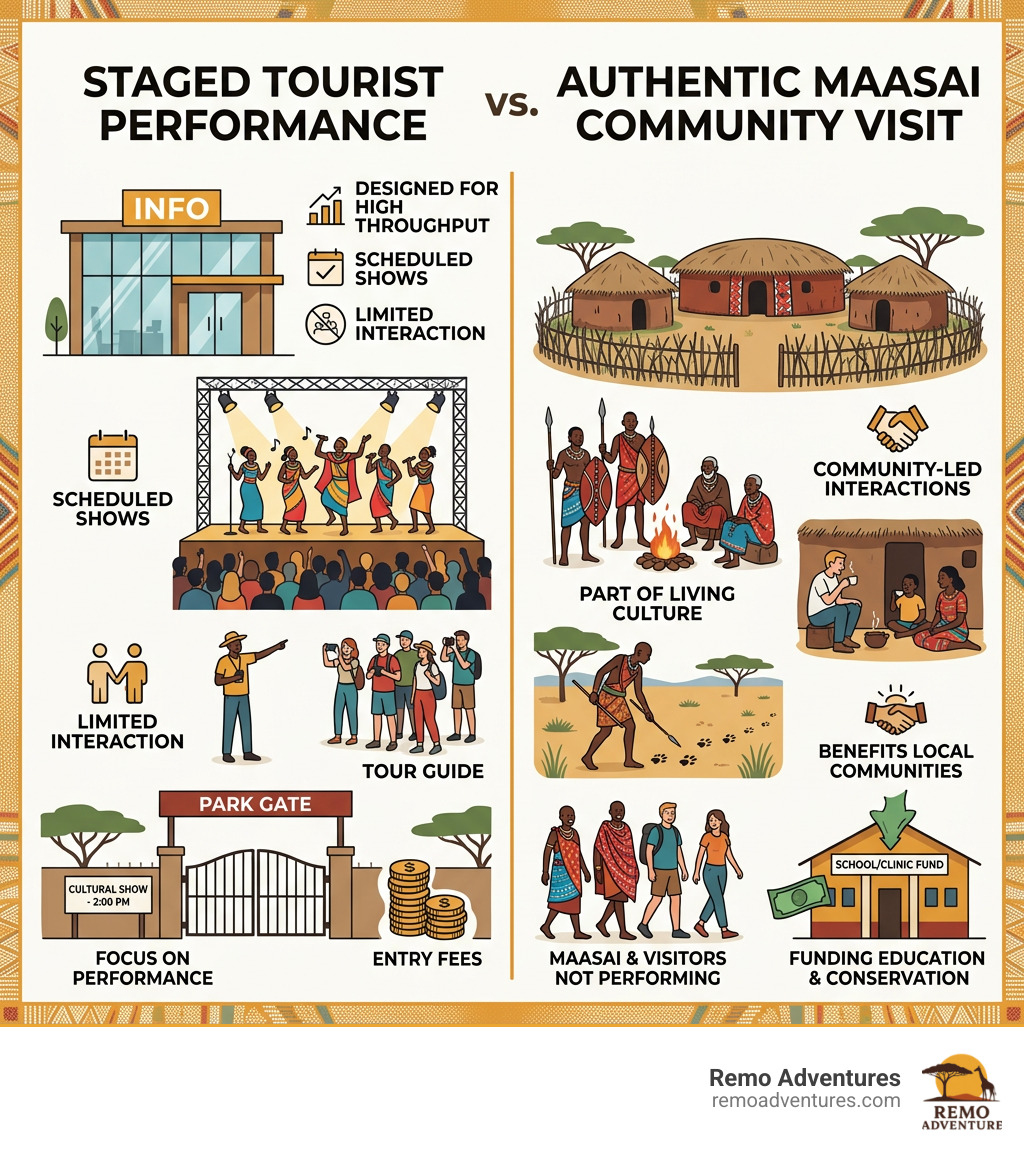
When we talk about Authentic Masai cultural experiences, we are referring to interactions that happen on the community’s own terms. In the regions surrounding the Serengeti and Arusha, the Maasai people have maintained a semi-nomadic pastoralist lifestyle for centuries. An authentic visit isn’t a “show” scheduled for 2:00 PM; it is an invitation into a living, breathing way of life.
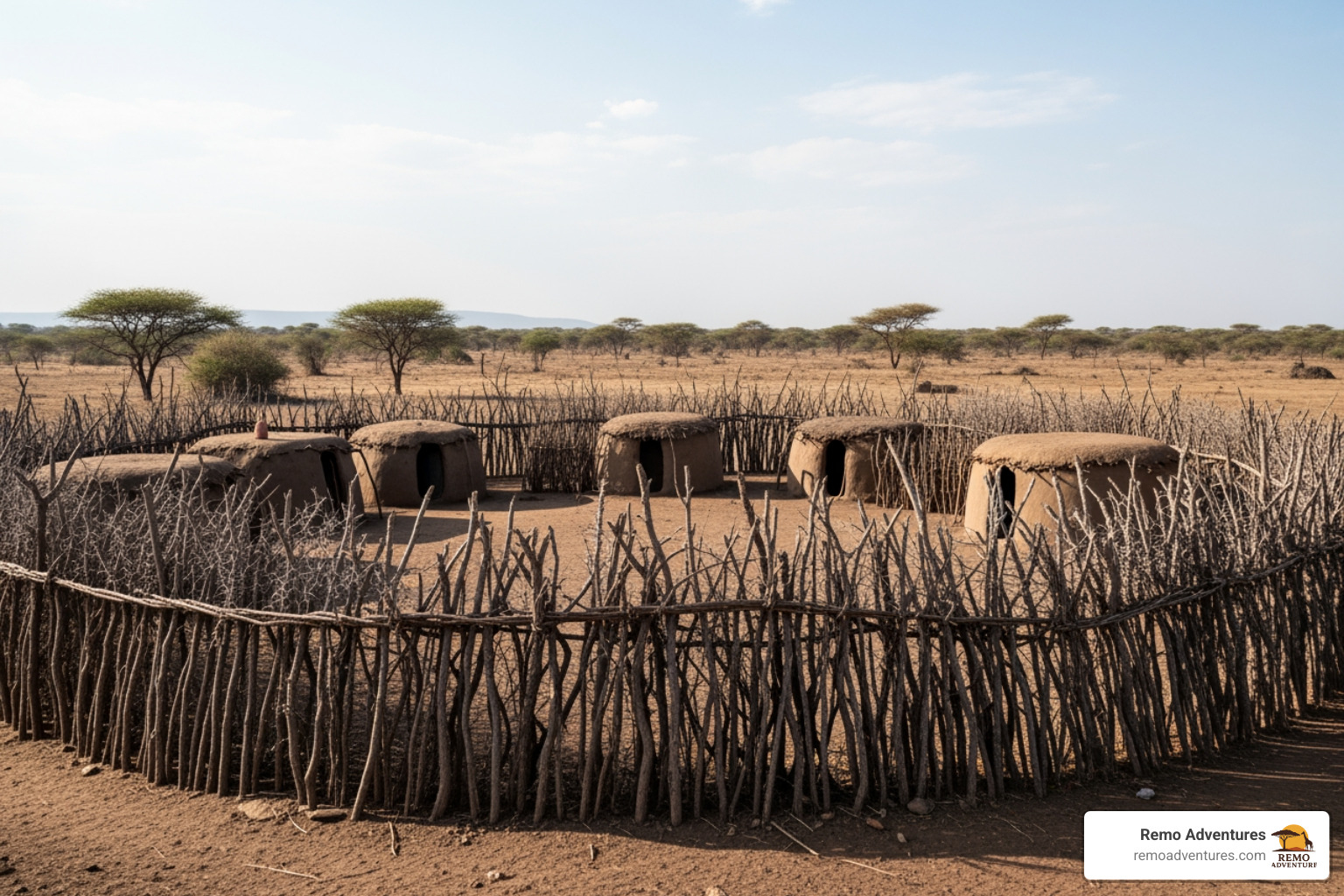
The heart of this experience is the Boma. A Boma is a homestead, typically a circular cluster of huts protected by a thick fence made of thorny acacia branches. This fence isn’t for decoration-it is a functional barrier designed to keep lions, leopards, and hyenas away from the livestock at night. Inside the Boma, you will find the Manyatta-the individual houses.
What makes these visits truly immersive is the lack of “modern” artifice. In many traditional villages near the conservation areas of Northern Tanzania, there is no piped water or electricity. Life follows the rhythm of the sun and the needs of the cattle. When you Experience Tanzania Safari with us, we prioritize visits to Bomas where the interaction is conversational. You aren’t just a spectator; you are a guest. You might find yourself peeking into the darkened interior of a manyatta, seeing the earthen stove where the family cooks, and understanding how a structure made of mud, sticks, and cow dung can remain remarkably cool in the African heat.
One of the most iconic figures you will meet is the Moran, or Maasai warrior. Historically, the Morans were the protectors of the tribe and the livestock. Their transition from childhood to warriorhood is marked by intense rites of passage that test their bravery and endurance.
In the past, a young man would often have to hunt a lion with nothing but a spear to prove his worthiness as a Moran. However, traditions have evolved beautifully alongside modern conservation efforts. Today, the role of the Moran has shifted from lion hunter to lion protector. Many warriors now use their tracking skills to assist conservationists, ensuring that the very predators they once hunted can thrive.
During a Tanzania Safari, meeting these warriors offers a glimpse into a world of discipline and “brotherhood.” You will see them in their vibrant red shukas, carrying their o-rinka (clubs), and perhaps demonstrating the tribal wrestling or spear throwing that keeps their skills sharp. Their knowledge of the land is unparalleled; they can interpret the slightest snap of a twig or the specific scent of the air to tell you what wildlife is nearby.
For those who want to go deeper than a single afternoon visit, immersive multi-day programs offer a transformative look at Maasai life. These aren’t just “tours”; they are educational exchanges. Some programs, such as specialized warrior training camps, allow visitors (minimum age usually 14) to spend several days living in remote hill camps.
These programs often include:
While many travelers head straight for a Safari Zanzibar beach holiday after their bush experience, those who take the time for a multi-day cultural stay often find it is the highlight of their entire trip. You arrive as a stranger, but after five days of learning tribal wrestling and sharing stories by the fire, you leave feeling like part of the family.
A common misconception is that a Maasai visit is just about the “jumping dance.” While the Adumu is spectacular—a display of strength where warriors jump vertically without their heels touching the ground—it is only one layer of the culture.
In an authentic setting, you will witness the daily labor and artistry of the Maasai women. They are the architects of the community, responsible for building the manyattas using a mixture of mud, grass, and ash. They are also world-renowned artisans. Their beadwork isn’t just jewelry; the colors and patterns tell stories of a person’s age, marital status, and social standing.
To help you understand how these experiences vary across the region, here is a comparison of what to expect:
| Feature | Tanzania (Serengeti/Arusha) | Kenya (Masai Mara) |
|---|---|---|
| Primary Focus | Deep cultural immersion & walking safaris | High-volume village visits & photography |
| Accessibility | Often requires a drive from Arusha or Karatu | Many villages located right at park gates |
| Vibe | Generally more traditional and less commercial | Can feel more “touristy” due to high traffic |
| Activity Level | High focus on herding and bush walks | High focus on dance and market sales |
When you book a Serengeti Safari Tour, we steer you toward the areas where the interaction feels natural, ensuring you aren’t just another face in a crowd of tourists.
The best way to respect a culture is to try and learn its skills. During a genuine visit, the warriors and elders are usually eager to teach. You might find yourself sitting on the ground, trying to rub two sticks together to create fire—a task that looks easy when a Moran does it in 30 seconds but is surprisingly difficult for the uninitiated!
You can also practice:
The Maasai culture is incredibly family-oriented, making it a perfect addition to a Tanzania Safari and Zanzibar family package. Children, in particular, find common ground very quickly through play.
Maasai children start learning their roles early. Visiting kids can join in herding sheep or goats, which is a great way to learn responsibility and animal husbandry. Many villages also have local schools supported by tourism. It is a wonderful experience for visiting children to play a game of soccer with Maasai students or join in a game of Mancala, a traditional board game played with stones and holes in the ground.
Beadwork sessions are also a hit with families. Maasai women will sit with you and show you how to thread the tiny, vibrant beads into patterns. It is a quiet, meditative way to spend an afternoon, listening to the women sing as they work.
Planning Authentic Masai cultural experiences requires a bit of “homework” to ensure your money is going to the right place.
The Cost Factor: As mentioned, a standard village visit usually costs between $25 and $50 USD. This fee typically covers the entry to the Boma and a guided tour by a member of the community. If you are on a road safari with your own driver-guide, the fee is often on the lower end. If your luxury camp organizes a “fly-in” package, they may charge $50 to account for the logistics and specialized guides.
The Ethics of Souvenirs: After the dances and the tour, you will likely be shown a “market” area where the women sell their beadwork. It is important to know that while the sales pitch can be determined, it is not mandatory to buy anything. However, keep in mind that these sales are often the primary source of income for the women in the community, funding everything from healthcare to school fees. Bargaining is expected and part of the social interaction—just keep it friendly!
Community Benefits: The best experiences are those that have a clear benefit to the local tribe. Since 2006, many cultural camps in the region have used tourism funds to provide free primary and secondary education for local children and create work projects specifically for widowed women. When you choose your Safari Holiday Packages, look for operators who partner directly with Maasai-owned conservancies or community leaders.
A visit generally costs between $25 and $50 per person. This often includes a greeting ceremony, a tour of the manyattas, a demonstration of fire-making, and a dance performance. Always clarify if road transfers from your lodge are included in this price.
A Boma is the entire homestead or enclosure, usually surrounded by a thorn fence. A Manyatta is the individual house within that enclosure. Manyattas are traditionally built by the women of the tribe and are designed to be semi-permanent, reflecting the Maasai’s nomadic history.
Tourism provides an alternative income to traditional cattle herding, which can sometimes lead to overgrazing or human-wildlife conflict. By seeing the value in wildlife tourism, communities are more motivated to protect the lions and elephants that roam their land. Furthermore, many warriors now work as rangers, using their ancient tracking skills to prevent poaching.
Finding Authentic Masai cultural experiences is about looking past the “gate-side” performances and seeking out genuine partnerships. It is the difference between watching a video and living the story.
At Remo Adventures, we believe that the best safaris are those that touch the heart as much as the camera lens. Our local expertise in Tanzania allows us to bypass the tourist traps and introduce you to Maasai communities where the welcome is warm and the traditions are real. We pride ourselves on transparent pricing and sustainable practices that ensure your visit leaves a positive footprint on the savanna.
Whether you are looking for a high-energy warrior demonstration or a quiet morning milking cows and sipping chai, we can craft a personalized journey that fits your family’s needs. Ready to see the Serengeti through Maasai eyes? Explore our Tanzania Safari options today and start planning the adventure of a lifetime.